When considering egg donation, intended parents typically face two main options: fresh donor egg cycles or frozen donor eggs. Both approaches can result in healthy pregnancies, but they differ in timing, cost, success rates, and overall logistics. Understanding these differences will help you make the right decision for your family-building journey.
Key Takeaways
- Fresh donor eggs usually provide more embryos and higher flexibility for future siblings, but take longer and cost more.
- Frozen donor eggs offer immediate availability and lower cost, but yield fewer embryos and may involve some egg loss during thawing.
- Research covering nearly 50,000 donor egg transfers (2018–2020) found that fresh donor eggs achieved somewhat higher live birth rates compared to frozen donor eggs, though both are effective and widely used.
- Multiple studies report that with modern vitrification techniques, 80–90% of eggs survive thawing — meaning about 10–20% may not survive.
- The best choice depends on your timeline, budget, number of children desired, and comfort with uncertainty.
Fresh Donor Egg Cycles
How It Works
Fresh egg donation begins when you select a donor through an egg donation agency. After confirming her availability and completing medical screenings, legal contracts are signed, and the donor starts medications to stimulate egg production. Eggs are retrieved and immediately fertilized at the clinic.
👉 Learn more about the full egg donation process here.
What to Consider
- Longer Timeline: Typically 2–3 months or more, since it involves donor matching, medical and genetic screening, legal contracts, and the donor’s ovarian stimulation and egg retrieval process.
- Higher Uncertainty: Donors may face schedule conflicts or withdraw, causing possible delays.
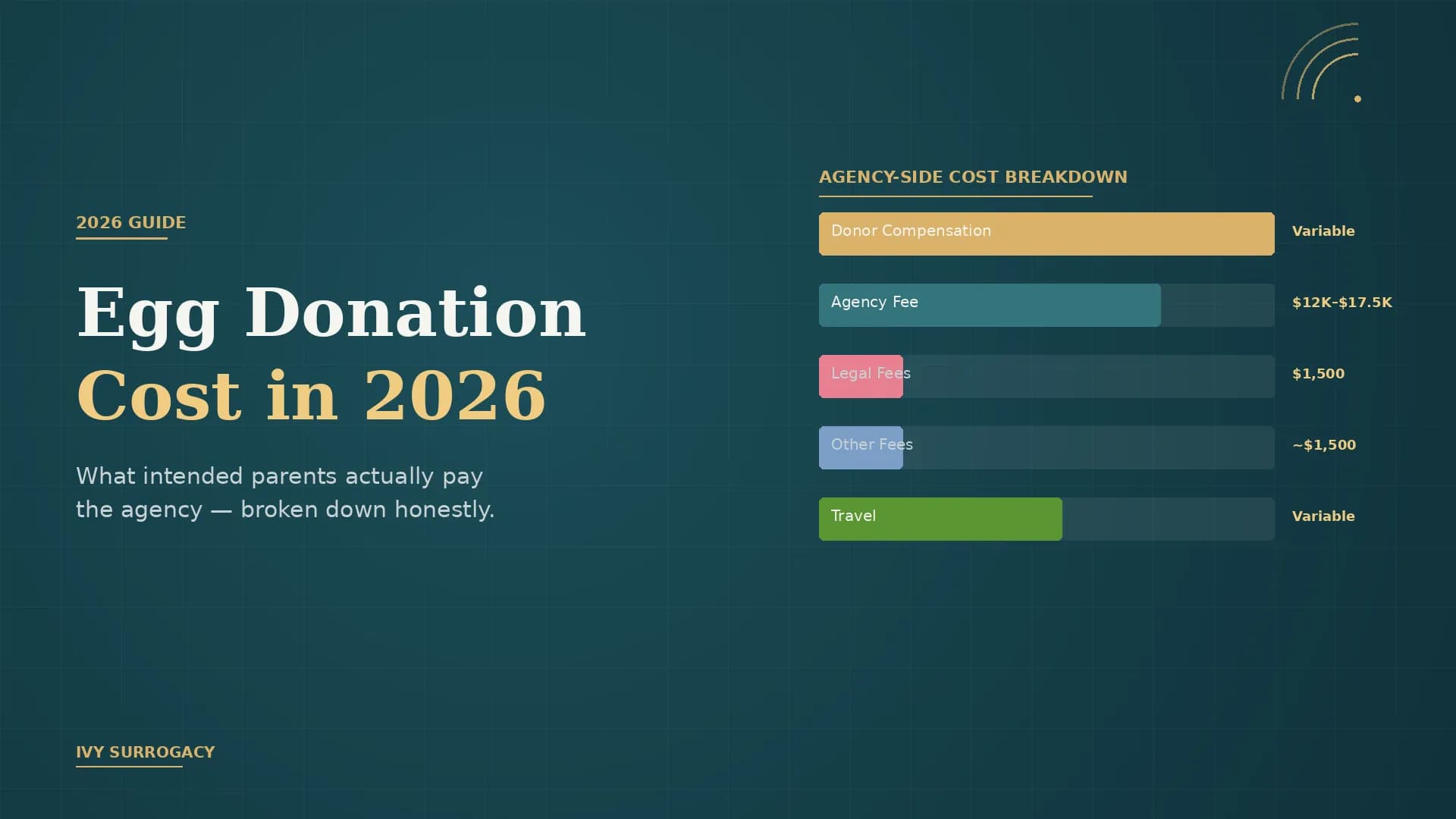
- Higher Costs: Includes donor compensation, legal and medical fees, and travel expenses.
- Wide Selection: Access to a large pool of donors—including Ivy League egg donors—who often prefer fresh cycles.
- Variable Egg Quantity: On average, 15–30 eggs can be retrieved, depending on the donor’s health and response.
- More Embryos: Usually yields a larger number of embryos, ideal if you want multiple children or plan to do PGT for gender selection.
Frozen Donor Eggs
How It Works
Frozen eggs are stored at specialized egg banks and are available for immediate purchase. Intended parents can select and buy predetermined sets of eggs, which can be shipped to their fertility clinic.
What to Consider
- Quick and Convenient: No waiting for donor screening or cycle coordination—eggs are ready right away.
- High Certainty: Eggs are already retrieved and frozen, eliminating scheduling risks.
- Lower Costs: Typically more affordable, especially if fewer eggs are needed.
- Possible Egg Loss: With vitrification, about 80–90% of eggs survive thawing, meaning a small portion may not be viable.
- Fewer Embryos: Generally results in fewer embryos, which may limit options for multiple children or PGT for gender selection.
Quick Comparison
Aspect | Fresh Donor Eggs | Frozen Donor Eggs |
|---|---|---|
Availability | Most agencies | Specialized egg banks only |
Timeline | 2–3 months or longer | Immediate |
Certainty | Some uncertainty | Very high |
Number of Eggs | 15–30 (variable) | Fixed, usually 6–12 |
Cost | Higher | Lower |
Donor Selection | Wide, including Ivy League donors | Limited to bank inventory |
Freeze-Thaw Losses | None | 10–20% possible |
Number of Embryos | More, often enough for siblings | Fewer, may not support multiple pregnancies |
Success Rates | Slightly higher (fresh advantage) | Slightly lower but effective |
👉Still unsure which option is right for you? Check out our guide on How to Select an Egg Donor
Final Thoughts
Both fresh and frozen donor eggs can lead to a successful and joyful outcome. Fresh cycles are often better if you:
- Want a wide choice of donors
- Are planning for multiple children
- Prefer the possibility of gender selection
Frozen eggs may be the best option if you:
- Need to start quickly
- Have a limited budget
- Want certainty and less waiting
Ultimately, the decision comes down to your timeline, financial planning, and family goals.
👉 Ready to explore your options? Apply here as Intended Parents or call us at (626) 545-1617 to speak with our team.
Frequently Asked Questions (FAQ)
1. Which option has higher success rates?
Research shows that fresh donor eggs generally achieve somewhat higher live birth rates compared to frozen donor eggs. However, both are highly effective and widely used in U.S. fertility clinics.
2. Are frozen donor eggs cheaper than fresh cycles?
Yes. Frozen eggs are usually more affordable, especially if you don’t need a large number of embryos.
3. Can I use PGT (genetic testing) with frozen eggs?
Yes. Embryos created from both fresh and frozen donor eggs can undergo PGT. Fresh cycles often provide more embryos for testing.
4. If I want more than one child, which is better?
Fresh donor eggs typically produce more embryos, which is advantageous if you want multiple children or future siblings.
5. Can frozen donor eggs be shipped to my clinic?
Most U.S. egg banks can ship frozen donor eggs to fertility clinics within the United States, and in some cases internationally, depending on regulations.
References
- Braun H, Kissin DM, Crawford S, Kawwass JF, Jamieson DJ. Trends and outcomes of fresh and frozen donor oocyte cycles — United States, 2013–2020. Fertil Steril. 2024;121(4):762-772.
- Cobo A, García-Velasco JA, Domingo J, Pellicer A, Remohí J. Elective and onco-fertility preservation: factors related to IVF outcomes. Hum Reprod Update. 2018;24(1):29-50.
- Garratt R, et al. Clinical outcomes of vitrified-warmed autologous oocytes. Reprod Biomed Online. 2025;60(2):123-132.