
🚀 Key Takeaways: At a Glance
- The “Fit to Fly” Rule: While general advice suggests waiting 2 months, most airlines allow newborns (2–14 days old) to fly with a doctor’s clearance letter.
- Surrogacy Specifics: You may need to fly before the official birth certificate arrives. Always carry your Parentage Order (Judgment) and Hospital Discharge Papers.
- Safety First: Medical experts strongly recommend purchasing a separate seat and using an FAA-approved car seat, rather than the “lap infant” option, for maximum safety.
- International Parents: Pack heavily with Ready-to-Feed formula (no mixing required) and disposable nipples to avoid using airplane water.
- TSA Liquid Rules: The 3.4oz rule does not apply to breast milk, formula, or nursery water. You can bring what you need.
Introduction
Flying with a newborn is a daunting task for any parent, but for surrogacy families, it is a necessary mission to get home. Whether you live in a different state or a different country from your surrogate, you have a mission: Getting your baby home.
At Ivy Surrogacy, we understand that waiting 2-3 months for a baby’s immune system to mature—as often suggested in standard parenting books—is simply not possible for families living out of hotels or rentals.
This guide bridges the gap between medical safety guidelines and logistical reality. Here is how to navigate airline policies, TSA checkpoints, and in-flight health protection for your newborn.
1. The “Go/No-Go” Decision: Airline Rules vs. Medical Advice
Medical Best Practices (The “Harm Reduction” Approach)
Pediatricians generally advise avoiding airports until a baby has received their first round of vaccinations (around 2 months). However, when travel is necessary, experts recommend a “Cocooning” strategy:
- Preemies: If your baby was premature (<37 weeks), do not fly until they have passed the “Car Seat Test” (a challenge test usually done in the NICU) and have explicit clearance from the neonatologist regarding oxygen levels at altitude.
- Full-Term Healthy Babies: Generally considered safe to fly after the first week, provided they are feeding well, have no jaundice issues, and parents have obtained a “Fit to Fly” letter.
Airline Policies Comparison Table
Do not assume all airlines are the same. Some are surrogacy-friendly; others are strict.
AirlineMin. AgeRequirement for Infants < 14 DaysBest For…Official PolicyAmerican2 daysMedical Letter Required if baby is under 7 days old.Top Pick for domestic IPs needing to get home fast.View PolicyDelta7 days*Allows <7 days ONLY with a physician’s approval letter.Good for international connections.View PolicyUnited7 daysStrict. No infants under 7 days accepted.Families who can stay locally for a week.View PolicySouthwest14 daysStrict. Medical release required if under 14 days.Avoid if you need to leave immediately after discharge.View PolicyAlaskaNoneRecommend doctor consult; no hard minimum.West Coast travel.View Policy
Booking Your Ticket: Before vs. After Birth
- If baby is NOT born yet: Book the adult tickets first. You cannot add the baby online yet. Call the airline immediately after the birth to add them to your reservation.
- If baby IS born:
2. Surrogacy Logistics: Essential Documentation
Generic travel guides forget this, but for intended parents, paperwork is as important as diapers. You might be traveling before Vital Records has processed the official Birth Certificate.
What to Carry (The “Must-Haves”):
- The “Fit to Fly” Letter: Ask the pediatrician at the discharge check-up (usually Day 2 or 3) to write a letter on letterhead stating: “Baby [Name] was examined on [Date] and is free of contagion and physically fit for air travel.”
- Legal Parentage Documents:
- Passport (International IPs): You cannot leave the U.S. without a passport for the baby. Ensure you also check your home country’s embassy requirements for emergency travel documents.
3. In the Air: Health & Safety Strategy
Here are the strict safety protocols recommended by medical professionals for protecting a newborn in a pressurized cabin:
The “Window Seat” Strategy
Always book a Window Seat. The aisle seat exposes the baby to every passenger walking by, every cough, and every brush of a bag. The window seat creates a natural shield.
Lap Infant vs. Buying a Seat
- The “Free” Option (Lap Infant): Domestic airlines allow children under 2 to fly free on a lap.
- The “Safe” Option (Ticketed Seat): We strongly recommend buying a seat for your newborn and bringing an FAA-approved infant car seat (bucket seat).
Protecting Little Ears
Babies cannot “pop” their ears intentionally.
- The Trick: Do not start feeding when the plane is just taxiing. Wait until the engines roar and the plane actually lifts off.
- Descent: Start feeding again when the pilot announces “initial descent” (about 30-45 mins before landing). The swallowing action opens the Eustachian tubes and prevents pain.
4. Navigating TSA with Baby Gear
The TSA (Transportation Security Administration) provides specific exemptions for families.
- Liquids Rule Exemption: Formula, breast milk, and nursery water are EXEMPT from the 3.4oz (100ml) rule. You can bring “reasonable quantities” (enough for the flight + delays).
- Strollers & Car Seats: You can gate-check these. They must go through the X-ray machine.
- The Screening: You will carry your baby through the metal detector. Do not hand your baby to a stranger or put the baby in the X-ray.
5. Special Notes for International Parents (Long-Haul)
Flying 10+ hours with a newborn requires extra prep.
- Bring “Ready-to-Feed” Formula: This is crucial. Do not rely on powdered formula that requires mixing with water.
- Book the Bassinet Row: Most wide-body international aircraft have wall-mounted bassinets in the bulkhead rows. Call the airline immediately after booking. These are first-come, first-served and have weight limits (usually ~20-25 lbs).
- Hydration & Saline: Airplane air is incredibly dry. Newborns dehydrate faster than adults. Feed on demand, and use generic saline nose drops every 3-4 hours to keep the baby’s nasal passages moist, which helps fight off viruses.
Common Questions from Intended Parents (FAQ)
1. My baby was born via surrogacy and we don’t have the birth certificate yet. Can we fly?
Domestically, yes. Airlines verify age, not custody. A hospital discharge record or immunization card showing the date of birth is usually accepted for age verification (under 14 days). However, always carry your attorney-prepared court order (Judgment) just in case security asks about the relationship.
2. What if my baby FAILS the High Altitude Simulation Test (HAST)? Are we stuck?
No, you can still fly, but it requires coordination. We have seen success stories where babies failed the test but flew home safely with medical support.
- Step 1: Obtain a prescription for in-flight supplemental oxygen from your doctor.
- Step 2: Contact the airline’s Medical Desk to submit a MEDIF form (Medical Information Form).
- Step 3: Arrange oxygen. Some international airlines can provide oxygen cylinders on board, while others require you to rent an FAA-approved Portable Oxygen Concentrator (POC).
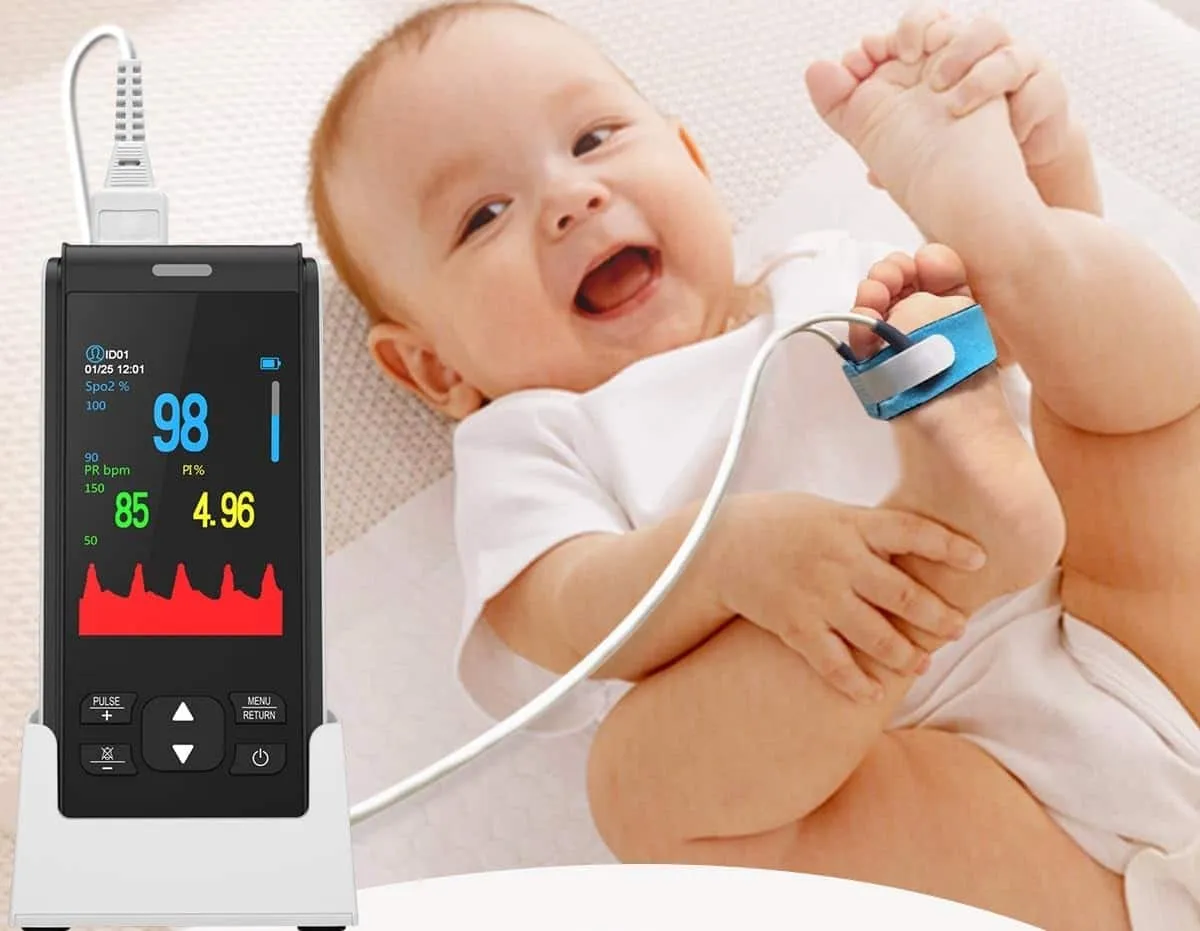
- Step 4: Bring a portable infant Pulse Oximeter to monitor your baby’s oxygen levels during the flight.
3. My baby is a preemie (born at 35 weeks). Can we fly at 2 weeks old?
This is a strict medical decision. Premature babies may have lower blood oxygen levels. You must ask your NICU doctor for a “High Altitude Simulation Test” (HAST) if there are any lung concerns. Do not fly without explicit clearance.
4. Should I pre-board?
Yes. Use “Priority Boarding” for families. This gives you time to wipe down the entire seat area (tray tables, armrests, light buttons) with disinfectant wipes and install the car seat before the crowd arrives.
Conclusion
Bringing your baby home is the final, most exciting step of your journey. While the logistics of flying with a neonate—especially one requiring medical clearance or extra documentation—can feel overwhelming, proper preparation makes all the difference.
At Ivy Surrogacy, we are committed to supporting our intended parents from the very first match until you are safely back in your own living room. Whether it’s coordinating with legal teams for travel docs or advising on medical flight protocols, we are here to ensure your journey home is as smooth as possible.
Safe travels to you and your little one!
References & Resources
For the most up-to-date policies, please check the official links below:
- American Academy of Pediatrics: Flying with Baby FAQs
- TSA: Travel Rules for Children
Medical Disclaimer:
The information provided in this blog post is for educational and informational purposes only and does not constitute professional medical advice, diagnosis, or treatment. Always seek the advice of your pediatrician, neonatologist, or other qualified health providers with any questions you may have regarding your newborn’s health or ability to travel, especially if your baby was born prematurely or has existing medical conditions.


