A successful egg donor is not just generous, but also consistent and committed—traits that directly impact future compensation and opportunities. Egg donation is a life-changing act, and in this guide, we’ll show you how to improve your results, build your donor reputation, and maximize the rewards of your generosity.
While first-time egg donors typically receive a base compensation, experienced egg donors with a history of successful donations are often offered significantly higher amounts. Why? Because a proven track record of producing high-quality eggs in good quantity gives intended parents greater confidence in the chances of success.
Why Do Experienced Egg Donors Earn More?
It all comes down to results. Experienced egg donors with successful retrieval cycles are seen as more reliable, and the outcomes they’ve delivered before (strong egg yield and embryo development) signal a higher likelihood of success again. Intended parents are often willing to pay more for this peace of mind.
A successful donation doesn’t just mean good numbers—it means viable embryos that make it through fertilization, culture, genetic testing (such as PGT-A), and ultimately lead to a live birth.
💡 Real Example: Ivy League Donor, Higher Compensation One compelling example comes from a Chinese egg donor who graduated from an Ivy League university. She completed five donation cycles, and each time her compensation increased based on her outstanding results:
- First donation: $40,000
- Second donation: $60,000
- Third donation: $80,000
- Fourth donation: $100,000
- Fifth donation: $200,000
What changed? Not her age, education, or background—she remained the same person. What grew was her proven track record: every cycle produced strong egg counts, high-quality embryos, and great results for intended parents. That consistency made her one of the most in-demand donors.
👉 For a deeper dive, read Why Experienced Egg Donors Receive Higher Compensation: A Comprehensive Analysis.
Why Are Egg Quality and Quantity So Important?
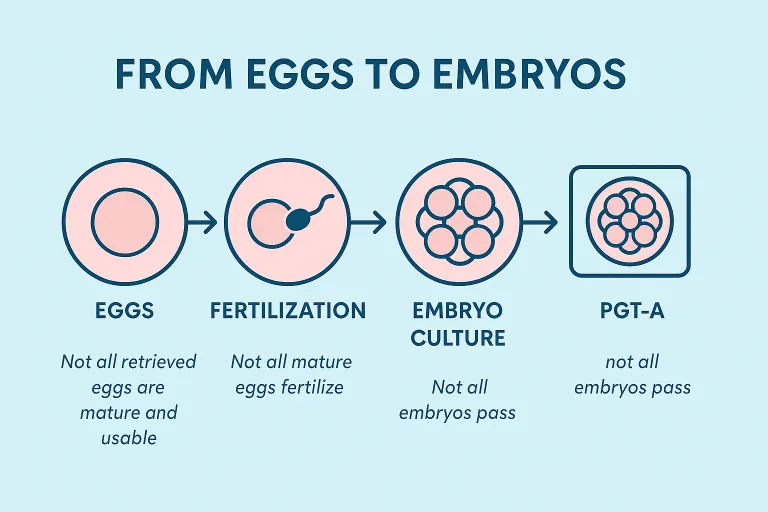
Intended parents may hope to have more than one child or want to select embryos based on gender. However, each stage of the IVF process reduces the number of viable embryos:
- Not all retrieved eggs are mature and usable
- Not all mature eggs fertilize
- Not all fertilized eggs grow into embryos
- Not all embryos pass PGT-A screening
- Even screened embryos have a limited success rate (about 60% live birth per transfer)
That’s why both quality and quantity matter so much—because every healthy embryo starts with a healthy egg.
What Can Egg Donors Do to Improve Their Results?
While genetics do play a role, there are several key actions that egg donors can take to ensure better outcomes:
1. Follow Medical Instructions Without Fail
Adherence to protocol is crucial. Medications must be taken on time, at the right dosage, and in the correct method. A single mistake can have significant consequences.
For example, missing a Ganirelix injection (which prevents premature ovulation) can lead to early release of eggs before retrieval—resulting in a failed cycle.
If you have any confusion or concerns, contact the IVF clinic or your egg donation agency immediately. Never guess when it comes to medication.
2. Pass Every Medical Screening—Including Drug Tests
Even if you’ve donated successfully before, each new cycle requires a full medical evaluation. One area often overlooked is drug testing.
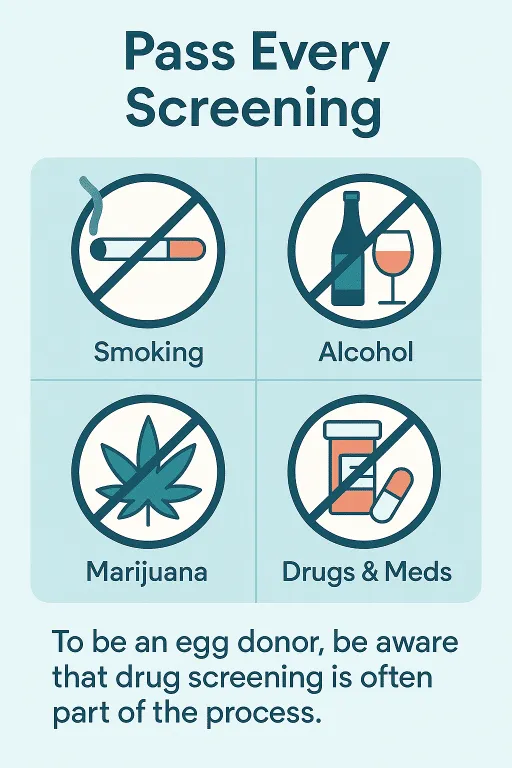
To pass these screenings:
- Avoid alcohol, smoking, and marijuana
- Do not use recreational or prescription drugs without clinic approval
Failing a screening can disqualify you or delay the process. 👉 Related reading: How Cannabis (THC) Affects Egg Quality and Fertility
3. Support Your Egg Quality with Lifestyle Choices
Although you can’t change your genetics, your daily habits can impact egg health:
- 🏃 Exercise regularly: Aim for moderate aerobic activity like walking, swimming, or yoga
- 💤 Maintain a consistent sleep schedule: Avoid late nights, as poor sleep can negatively affect egg quality
- 🥗 Eat a balanced diet: Focus on high-protein, low-carb meals
- 💊 Consider supplements: CoQ10 and prenatal vitamins are commonly recommended to support egg development
4. Understand the Role of Age in Egg Donation
Timing matters. If you’re planning to become an egg donor, it’s best not to postpone. Egg quality naturally declines with age, and many agencies set an upper age limit—often around 29–31. Even for highly educated or Ivy League graduates, once past 32, the chances of being selected drop dramatically, as intended parents see older eggs as a higher risk.
If you’re considering multiple donation cycles, starting earlier gives you more opportunities before you reach the age cutoff. The earlier you begin, the better your chances of building a strong donor record.
5. Commit Fully to the Process
Egg donation isn’t a one-time event—it’s a carefully coordinated medical process that spans several weeks. Donors need to attend all monitoring appointments, follow instructions precisely, and be available on the retrieval day. Flexibility and commitment are essential traits of successful egg donors.
6. Be Clear and Consistent About Compensation
It’s perfectly fine to share your expectations about compensation before being matched. However, once you and the intended parents confirm the compensation amount at the match stage, it’s important to stick with that number. Asking for more later—especially after medical screening—can create frustration and even cause the intended parents to cancel the match. Clear communication and consistency help you build trust and protect your reputation as a reliable donor.
Why Being a Successful Egg Donor Brings Better Opportunities
Becoming a successful egg donor can transform not only your compensation but also how quickly you’re matched with intended parents. Each successful cycle adds to your record, allowing you to:
- Receive higher compensation in future cycles
- Be matched faster with new intended parents
- Establish a reputation as a responsible and reliable donor
This level of dedication is what separates an average donor from a truly successful egg donor.
Key Takeaways
- Successful egg donors can significantly increase their compensation with a strong track record.
- Egg quality and quantity are critical because every stage of IVF reduces embryo numbers.
- Lifestyle, adherence to protocol, and drug-free screenings are key to better results.
- Age matters—starting earlier gives donors more opportunities and reduces the risk of being disqualified later.
- Building a reputation as a reliable donor leads to faster matches and higher demand.
FAQ About Becoming a Successful Egg Donor
1. What is the age limit for egg donation?
Most agencies and clinics accept donors between 21–29 years old. After age 30, opportunities decline sharply.
2. How many times can someone donate eggs?
Most clinics follow the guideline of no more than six donation cycles.
3. Does egg donation affect my future fertility?
Research shows egg donation does not reduce a woman’s long-term fertility when performed safely.
4. How much do successful egg donors get paid?
Compensation starts around $8,000 for first-time donors and increases significantly with proven success.
5. When is the best time to apply to become an egg donor?
The earlier, the better. Younger donors are more likely to be selected and matched quickly.
✅ Ready to Start or Continue Your Journey?
Apply today with Ivy Surrogacy and take the first step toward making a lasting impact—while being fairly rewarded for your generosity.