
Are you a student or graduate from an Ivy League school—or perhaps Stanford, MIT, or another top-tier university? Your academic background could open the door to an incredible opportunity: becoming an Ivy League egg donor. Not only can you help hopeful parents build their families, but you can also earn generous compensation—perfect for paying off student loans, launching a business, or building your savings. This guide covers everything you need to know about becoming an Ivy League egg donor and why it’s worth considering.
Why Do Parents Seek Ivy League Egg Donors?
Many intended parents specifically look for Ivy League egg donors because they want their child to inherit exceptional traits—like high intelligence, athletic ability, or other standout qualities. Your Ivy League education shows academic excellence and well-rounded potential, making you a top choice for families willing to invest in their future child’s genetics.
How Much Do Ivy League Egg Donors Earn?
The compensation for Ivy League egg donors is impressive and varies based on your experience and profile:
- First-time donors: Expect a starting range of around $30,000, with potential for more depending on your qualifications and background.
- Experienced donors: If you’ve donated successfully before, especially from a top school like Harvard, and have an attractive appearance, compensation can exceed $100,000.
Real Example:
one of our Chinese egg donors who graduated from an Ivy League university shows how exceptional qualities can lead to high compensation:
- First donation: $40,000
- Second donation: $60,000
- Third donation: $80,000
- Fourth donation: $100,000
- Fifth donation: $200,000
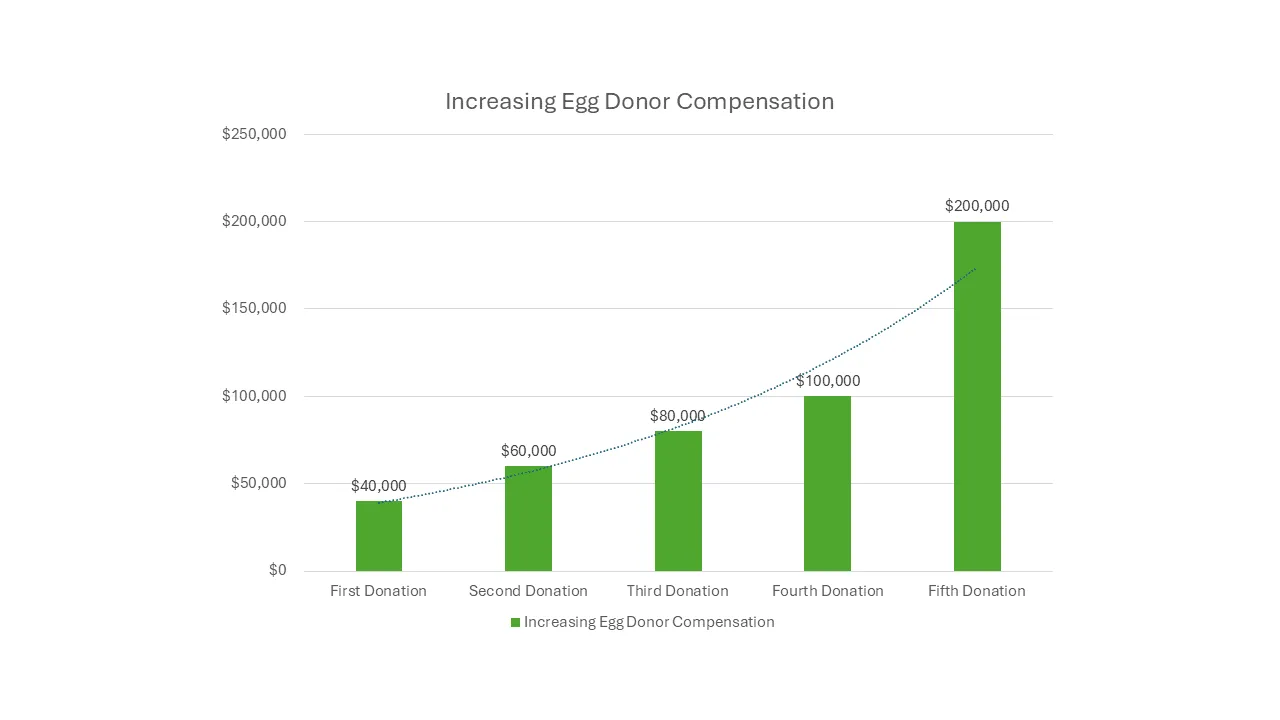
Why was her compensation so high? Several factors contributed to her value as a donor:
- Rare Profile: As a Chinese Ivy League graduate, she is extremely rare in the egg donor pool.
- Physical Appeal: At 5’6” with an attractive appearance, she met the most requested physical criteria.
- Proven Results: Her egg donations consistently resulted in high-quality embryos, with each cycle yielding 7 to 10 embryos that successfully passed PGT-A genetic screening—demonstrating both strong fertility and excellent genetic health.
- Genetic Health: Her screening showed no disease-causing genes, meaning she was compatible with any intended parent.
Her story also highlights a broader trend: the increasing demand for Asian egg donors. Discover more in our article: The Growing Demand for Asian Egg Donors in the U.S.: Opportunities and Insights
Your academic excellence, personal traits, and donation results could put you on a similar path. If you’d like to increase your chances of being matched and earning higher compensation, check out our guide: Becoming a Successful Egg Donor: Tips for Higher Quality, Better Results, and More Opportunities.
Curious why experienced donors are valued so highly? Read our full analysis here: Why Experienced Egg Donors Receive Higher Compensation: A Comprehensive Analysis
Whether you’re a first-time or experienced donor, your background and profile can greatly influence your opportunities. Wondering how much you could earn? Contact us today for a personalized estimate.
Who Qualifies as an Ivy League Egg Donor?
The term “Ivy League egg donor” is broader than you might think:
- Beyond the Ivy League Eight: It includes students or grads from prestigious schools like Stanford and MIT, which rival Ivy League institutions in reputation.
- Current students count too: You don’t need a diploma yet—being enrolled at an Ivy League or equivalent school qualifies you.
Whether you’re a freshman or an alum, you could be eligible to apply.
What’s the Ivy League Egg Donation Process Like?
The medical process for Ivy League egg donors is the same as for any egg donor:
- Initial screening: Includes medical, genetic, and psychological evaluations.
- Legal contracts: Outlines rights and obligations.
- Stimulation cycle: Hormone injections over ~10–12 days.
- Egg retrieval: A short outpatient procedure with sedation.
It’s a straightforward, safe process that takes just a few weeks, managed by expert agency and medical teams. No special steps here, just standard care with big rewards. For a detailed walkthrough of each stage, visit our guide: What to Expect During the Egg Donation Procedure
What Makes Ivy League Egg Donation Unique?
While the medical side is routine, being an Ivy League egg donor comes with a couple of distinctive features:
- Education Verification: Agencies will ask for proof of your education diplomas for graduates or an offer letter and transcripts for current students. Sometimes, intended parents hire third-party lawyers to double-check. Don’t worry—your privacy is protected, and this info stays anonymous. They’re just ensuring your Ivy League status is legit.
- Video Interviews: Most egg donations are anonymous, meaning you and the parents won’t share names or contact details. However, they might request a short video chat to get to know you. It’s not in-person—think Zoom-style—and the agency coordinates it, often with translation support if needed. Just keep it casual and avoid sharing personal info like your name or address.
These steps reflect the high value placed on your background, but they’re easy to navigate with our support.
How to Become an Ivy League Egg Donor (Step-by-Step)
Step 1: Submit a 30-second application form on our website.
Step 2: Speak with our coordinators for a free consultation.
Step 3: Complete your full donor profile with education proof, medical history, and photos.
When building your profile, photos and videos can play a key role in helping intended parents connect with you. Learn more in our guide: The Importance of Photos and Videos for Egg Donors
Step 4: Get matched and proceed with the donation process.
Apply now or call us to get started today!
For a complete overview of the egg donation journey, check out our general guide: How to Become an Egg Donor: A Step-by-Step Guide.
Why Become an Ivy League Egg Donor?
As an Ivy League egg donor, you’re not just earning money—you’re making a difference. With compensation starting at $30,000 and topping $100,000 for top-tier candidates, it’s a smart way to tackle loans, fund a passion project, or boost your savings. In the meantime, you’re helping a family achieve their dream of parenthood. It’s a win-win.
Beyond the financial rewards, Ivy League egg donors often experience the profound satisfaction of helping intended parents achieve their dreams. For example, we worked with an Ivy League Asian egg donor whose generosity changed the lives of a middle-aged couple who had tragically lost their only child. Through her donation, they were able to welcome a new baby and begin a new chapter of healing. You can read the full story here to see how one act of kindness can transform a family’s future.
Why Choose Ivy Surrogacy?
At Ivy Surrogacy, we specialize in connecting exceptional egg donors with families who deeply value education, character, and health. We offer:
- High-paying opportunities ($30K+ starting, $100K+ possible)
- Discreet and respectful process
- Professional guidance from start to finish
Let us help you make an impact—while securing your future.
Ready to Apply as an Ivy League Egg Donor?
If you’re enrolled in or graduated from an Ivy League school (or top university like Stanford or MIT), are in good health, and are interested in helping a family with egg donation, now’s the time to act! We’re here to guide you every step of the way, with top-notch privacy and professional support. Want to learn more or start your application? Contact (626)-545-1617 today to start your journey as an Ivy League egg donor!
How to Find an Ivy League Egg Donor?
If you are an intended parent searching for an Ivy League egg donor, you’re not alone—many families actively seek highly educated egg donors and smart egg donors with exceptional academic and personal qualities. At Ivy Surrogacy, we have extensive experience recruiting top-tier Ivy League egg donors, giving us one of the largest and most diverse selections in the industry. Many of our donors have completed multiple successful egg donation cycles, helping families around the world achieve their dream of parenthood.
If you are looking for an Ivy League egg donor—or a highly educated or smart egg donor who meets your unique preferences—we welcome you to contact us or fill out our intended parent application form to get started. When selecting a donor, many families also consider genetic health as an important factor. To learn more, visit our guide: How to Choose a Sperm or Egg Donor Based on Genetic Screening.
Families working with Ivy League or highly educated donors also need to decide between fresh and frozen eggs. Learn the pros and cons in our guide: Fresh vs. Frozen Donor Eggs: How to Choose the Best Option for Your Family.
Looking for guidance on how to choose the right match? Don’t miss our article: How to Select an Egg Donor? Six Things You Should Know Before Choosing an Egg Donor
Frequently Asked Questions
1.Can I apply if I’m a freshman at an Ivy League school?
Yes, current students are eligible. You don’t need to be a graduate to apply.
2.Do I have to meet the intended parents?
No. Most egg donation arrangements are anonymous. In some cases, a video introduction via Zoom may be requested.
3.Is egg donation safe?
Yes. The process is medically supervised, widely practiced, and has an excellent safety record.
4.Will egg donation affect my future fertility?
No. Studies show there is no long-term impact on fertility for healthy women who donate eggs.
5.How and when is compensation paid?
Compensation is typically paid after the egg retrieval procedure is completed.
6.Can I donate eggs more than once?
Yes. Many Ivy League egg donors complete 2–6 cycles. Each donation must follow ASRM guidelines and receive medical clearance.
7. What is the highest pay for egg donation?
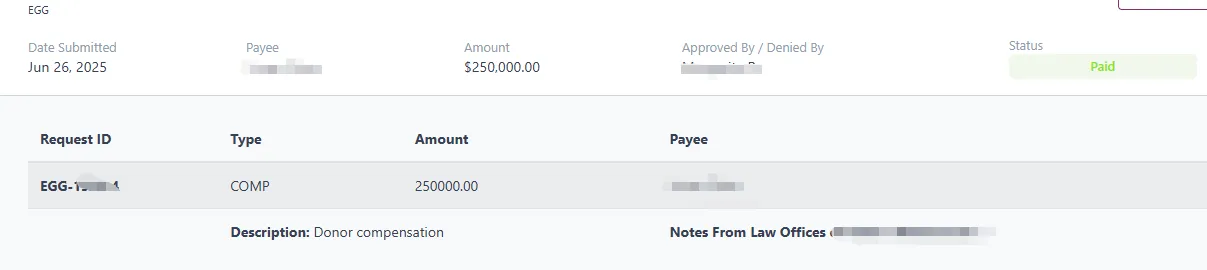
While egg donor compensation varies widely, we recently worked with an experienced Ivy League Asian egg donor whose compensation reached $250,000—the highest we have seen to date. Opportunities at this level are extremely rare and typically reserved for donors who combine exceptional academic backgrounds, unique ethnic heritage, and a strong track record of successful donations. Most donors will not qualify for such high figures, but top-tier profiles may receive significantly higher-than-average offers.
8. What makes Ivy League or highly educated egg donors so unique?
Intended parents often believe that highly educated or smart egg donors bring both academic potential and well-rounded personal qualities. While there’s no guarantee of passing on intelligence, families see these donors as offering the best possible start for their child.


