
Having a baby via surrogacy involves many decisions. One common question is whether to store the baby’s cord blood and/or cord tissue. These contain valuable stem cells that could be used in future medical treatments. This blog explains what cord blood and tissue are, how collection works during a surrogate birth, their medical potential, and the pros and cons to help you decide what’s right for your family.
At Ivy Surrogacy, we believe cord blood and tissue banking is a personal decision — not essential, but if your budget allows, storing is better than not storing. It’s a form of biological insurance: rarely needed, but potentially life-saving.
✅ Key Takeaways
- Cord blood and tissue banking is safe, painless, and coordinated in advance.
- It provides valuable stem cells that may help treat serious diseases now or in the future.
- Cord blood has established medical uses, while cord tissue offers future promise.
- Costs and usage likelihood should be carefully weighed.
- Ivy Surrogacy can assist intended parents in coordinating with trusted banking providers.
🧬 What Are Cord Blood and Cord Tissue?
Clarification: Cord blood can treat certain inherited genetic disorders, such as sickle cell disease—but typically for a sibling, not the child whose cord blood is stored. This distinction helps avoid confusion: cord blood is often not used to treat the child’s own genetic disease, but it can help a brother or sister who needs a stem-cell transplant.
Cord blood is the blood left in the umbilical cord and placenta after birth. It’s rich in hematopoietic stem cells, which are used to treat over 80 diseases including blood cancers, immune deficiencies, and some genetic disorders. These stem cells can regenerate blood and immune systems, making them useful for transplants in children and some adult patients.
Cord tissue, the actual umbilical cord, contains mesenchymal stem cells (MSCs). These cells have the ability to develop into various tissues like bone, cartilage, and fat. MSCs are not yet approved for standard treatments but are being researched in regenerative medicine for conditions like osteoarthritis, spinal injuries, and heart disease.
While cord blood is used in clinical treatments today, cord tissue banking is more of a forward-looking investment in potential future therapies.
👶 Collection During a Surrogate Birth
The collection of cord blood and tissue is safe, painless, and non-disruptive. For intended parents using surrogacy, it’s important to coordinate this in advance. Here’s how it typically works:
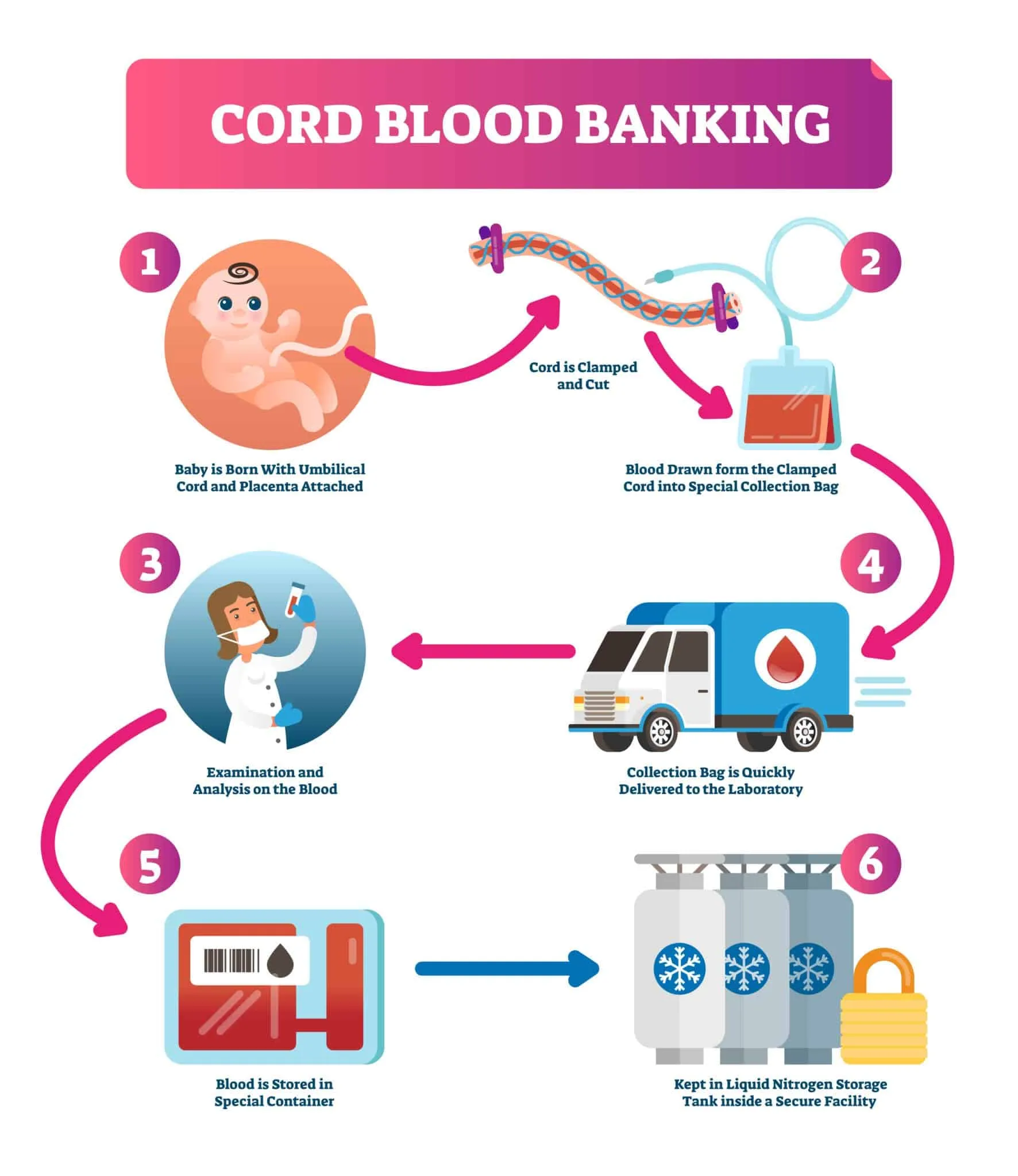
- Preparation: A collection kit is ordered from a cord blood bank and provided to the hospital before delivery. Your surrogacy agency and OB provider should be informed by 34–36 weeks of pregnancy.
- Delivery and Collection: After the baby is born, the umbilical cord is clamped and cut. Cord blood is drawn from the umbilical vein, and cord tissue is preserved in a separate container. The surrogate’s blood is also drawn to meet FDA safety requirements.
- Shipping to the Lab: The collected materials are packaged in the kit and sent via medical courier to a specialized lab, where they are tested, processed, and cryopreserved (frozen).
Cord blood and tissue collection does not interfere with standard surrogacy delivery plans and is a routine option at many U.S. hospitals.
🩺 How Can These Stem Cells Be Used?
Cord Blood
- Currently used in transplants for leukemia, lymphoma, sickle cell disease, and metabolic disorders.
- Autologous use (for the child): In some cases, the child may use their own stored cord blood for regenerative therapy, though this is rare.
- Allogeneic use (for relatives): Siblings and parents may be eligible to use the baby’s cord blood, depending on compatibility.
Cord Tissue
- Still under research: MSCs may eventually be used in treatments for arthritis, diabetes, spinal injuries, and autoimmune disorders.
- Potential for regenerative medicine: Early clinical trials are promising but not yet FDA-approved.
Some clinical trials have even explored using cord blood stem cells for children with cerebral palsy or autism spectrum disorder, although these are still considered experimental.
👍 Pros of Banking Cord Blood and Tissue
- Life-saving potential: Especially in families with a history of treatable conditions.
- Perfect match for the baby: Stored stem cells are a 100% match for the child.
- Possible match for siblings or relatives: Especially helpful if bone marrow matches are difficult to find.
- Safe and easy collection: Non-invasive and poses no risk to the baby or surrogate.
- Future medical use: Particularly true for cord tissue and regenerative therapies.
- Peace of mind: A one-time opportunity that could prove invaluable later.
⚠️ Cons and Limitations
- High cost: Fees vary widely depending on whether you store cord blood alone or with cord tissue, and whether you choose a 20-year or lifetime plan.
- Low usage probability: Most privately banked cord blood is never used.
- Cord tissue not yet in clinical use: Promising but still experimental.
- Not a cure-all: May not be helpful in treating genetic conditions.
- No public donation if privately stored: You forego the chance to help others.
💡 Ivy Surrogacy’s Perspective
We encourage intended parents to think of cord blood and tissue banking as a valuable but optional safeguard. If your budget allows, storing may bring peace of mind and future flexibility. If not, it’s perfectly acceptable to skip it — you’re still making the best decisions for your child.
💵 Cord Blood & Cord Tissue Storage Costs
Below is an example pricing structure from a U.S. private cord blood bank. Actual pricing varies by provider, storage duration, and whether you store cord blood alone or together with cord tissue.
📦 One-Time Payment Options
Storage Option | Duration | Total Cost | Notes |
|---|---|---|---|
Cord Blood Only | 20 years | $3,700 | One-time payment |
Cord Blood Only | Lifetime | $6,500 | One-time payment |
Cord Blood + Cord Tissue | 20 years | $6,700 | One-time payment |
Cord Blood + Cord Tissue | Lifetime | $11,825 | One-time payment |
📅 Installment Plans
Plan Type | Upfront Fees | Monthly Fee | Months | Total |
|---|---|---|---|---|
Cord Blood Only (20 yrs) | $50 + $300 at birth | $77 | 47 | ≈ $3,889 |
Cord Blood + Cord Tissue (20 yrs) | $50 + $400 at birth | $153.40 | 47 | ≈ $7,610 |
Cord Blood + Cord Tissue (Lifetime) | $50 + $4,000 at birth | $728.64 | 11 | ≈ $12,065 |
💡 What This Means for Intended Parents
Costs vary significantly by provider, storage duration, and whether you store cord blood alone or both cord blood and tissue. Some banks offer payment plans, while others provide discounted lifetime packages.
Ivy Surrogacy does not endorse specific companies, but we guide parents toward accredited, reputable providers and help coordinate the logistics.
Costs vary significantly by provider, storage duration, and whether you store cord blood alone or together with cord tissue. Some banks offer payment plans or lifetime packages. Ivy Surrogacy does not promote specific companies, but we can refer you to reputable, accredited banks if you’re interested.
For international intended parents, U.S.-based storage is recommended due to transport timing. Later, frozen samples can be transferred abroad if desired.
❓ FAQ
1. Is cord blood collection safe for the surrogate and the baby?
Yes. Collection happens after the cord is clamped and poses no risk.
2. Can international parents store cord blood in the U.S.?
Yes. Many banks serve international families and can arrange later shipment if needed.
3. Does the surrogate need to agree?
Yes. Her blood is tested to meet safety standards. This is handled contractually.
4. How long can cord blood be stored?
Decades, if cryopreserved properly.
5. What if I don’t bank?
The cord is discarded. You only get one chance to collect.
📘 Final Thoughts
Cord blood and tissue banking is a unique opportunity that occurs once — at birth. For intended parents through surrogacy, it’s worth considering whether you want to invest in a potential medical resource that may benefit your child or family.
At Ivy Surrogacy, we’re here to help you navigate these choices without pressure. Whether you decide to store or not, we’ll support you every step of the way.
👉 Interested in learning more? Contact Ivy Surrogacy today and let us help you explore trusted cord blood storage options. Your child’s future, your informed choice.
📚 References
- National Marrow Donor Program (NMDP). Cord Blood Donation Process.
- Brigham and Women’s Hospital. Cord Blood Donation.
- U.S. Food and Drug Administration (FDA). 21 CFR Part 1271 — Human Cells, Tissues, and Cellular and Tissue-Based Products.
- American Academy of Pediatrics (AAP). Cord Blood Banking for Potential Future Transplantation. Pediatrics.


