
Introduction
Welcome to Ivy Surrogacy, where we are dedicated to building families and fulfilling dreams of parenthood. Deciding to become a surrogate is a profound journey of compassion and purpose. This guide is designed to be your comprehensive resource, walking you through requirements, compensation, the surrogacy process, and the unique support that sets Ivy apart.
Key Takeaways
- What is it? Gestational surrogacy means you carry an embryo for intended parents, with no genetic link to the child.
- Eligibility: Surrogates must be 20–36 years old, have a healthy pregnancy history, a stable lifestyle, and a strong desire to help others.
- Compensation: First-time surrogates earn $45,000 – $60,000 base pay plus benefits. Experienced surrogates receive higher pay.
- The Process: From application and medical screening to matching, pregnancy, and delivery, Ivy provides step-by-step support.
- Why Ivy? Unlike large agencies, we offer personalized care, peer support, and presence at milestone appointments.
💡 Looking for quick details about surrogate pay? Visit our guide: How Much Do You Get Paid for Surrogacy?
Section 1: What Is Gestational Surrogacy and Who Do You Help?
What Is Surrogacy?
Gestational surrogacy is when a woman (the gestational carrier) carries a baby for intended parents. The embryo is created via IVF using eggs and sperm from the intended parents or donors. You will have no biological or genetic connection to the baby.
This provides legal clarity and emotional reassurance for everyone involved. 👉 For more, see the ASRM Ethics Committee Opinion on Gestational Carriers.
Who Do Surrogates Help?
By becoming a surrogate, you bring hope and family to:
- Couples struggling with infertility
- Same-sex couples who want a biological child
- Single intended parents ready for parenthood
- Women unable to safely carry a pregnancy
👉 Related reading: Why Intended Parents Choose Surrogacy
Section 2: Are You Eligible? Ivy Surrogate Requirements
To protect your health and the baby’s well-being, we follow ASRM guidelines and set clear eligibility requirements:

- Age: 20–36 years old
- Pregnancy History: At least 1 healthy birth; no more than 5 deliveries or 2 C-sections
- Medical Health: No major complications (e.g., preeclampsia, uncontrolled gestational diabetes)
- BMI: Within a healthy range (typically 19–30) for higher IVF success rates
- Lifestyle: Non-smoker, no drug use, minimal alcohol
- Emotional Wellness: No history of severe mental illness; must pass a psychological evaluation
- Support System: Financial stability and family/friend support during pregnancy
- Background: Ability to pass a criminal background check
- Communication: Open, honest, and reliable communication
💡 Wondering about special cases? Check out our blog: Can You Be a Surrogate After a Tubal Ligation?
Section 3: The Surrogacy Journey – Step by Step
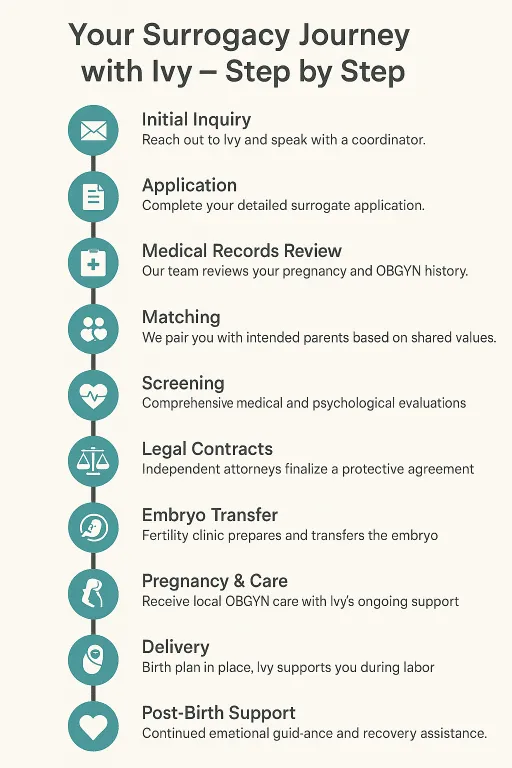
Once you decide to become a surrogate with Ivy, we’ve designed a streamlined, supportive process to guide you step by step. Here’s what to expect:
- Initial Inquiry & Consultation – Reach out to Ivy; a coordinator answers your first questions.
- Application – Complete a detailed form about your health and background.
- Medical Records Review – Our team checks past pregnancy and OBGYN records.
- Matching – Based on shared values, we connect you with intended parents.
- Screenings – Comprehensive medical exams and psychological evaluation, following ASRM’s clinical recommendations for gestational carriers.
- Legal Contracts – Independent attorneys ensure contracts are fair and protective.
- Medical Cycle & Embryo Transfer – Hormonal treatments prepare your body; the embryo is transferred at a fertility clinic.
- Pregnancy & Prenatal Care – Local OBGYN care with Ivy’s coordinator by your side.
- Delivery – Birth plan in place; our team is present to support you.
- Post-Birth Support – Emotional guidance, recovery assistance, and ongoing check-ins.
📌 Average Timeline: From application to embryo transfer usually takes 3–6 months.
👉 Want more detail? See our full Surrogacy Process for Surrogates.
Section 4: Surrogate Compensation and Benefits
When you become a surrogate with Ivy, your commitment is recognized through a transparent and generous compensation package:
Compensation ItemDetailsBase Compensation (First-Time)$45,000 – $60,000 (depending on state of residence)Base Compensation (Experienced)Higher pay, based on previous journeysMultiple Pregnancy Bonus+$10,000 per additional babySigning BonusUpon contract completionMedication Start BonusAt the beginning of medical protocolEmbryo Transfer BonusPaid after successful embryo transferMaternity Clothing AllowanceIncludedTravel ExpensesFully covered by intended parentsLost Wages ReimbursementIf applicableMedical Expenses100% covered by intended parents
💡 For a deeper breakdown, read our blog: How Much Do You Get Paid for Surrogacy?
Section 5: Why Choose Ivy Surrogacy?
Not all agencies offer the same experience. Here’s what makes Ivy unique:
- Expert Guidance: Many of our staff are former surrogates.
- Personalized Care: A dedicated coordinator supports you one-on-one.
- In-Person Presence: We attend milestone appointments, not just phone calls.
- Fast Matching: Thoughtful pairing based on shared values.
- Emotional Support: Monthly surrogate support groups.
- Legal Protection: Access to top surrogacy attorneys.
Testimonials
“They became my family and I didn’t feel like a paycheck… Ivy Surrogacy took care of me emotionally and physically.” – Bethany M.
“Someone was always there to answer every single question. I am definitely doing another journey with them!” – Andrea L.
Section 6: Frequently Asked Questions
1. What is a surrogate mother?
A surrogate is a woman who carries a baby for intended parents. At Ivy, surrogates are gestational carriers with no genetic link to the child.
2. How does being a surrogate work?
The process includes medical preparation, embryo transfer, pregnancy, and delivery with Ivy’s support throughout.
3. How much do surrogates make?
First-time surrogates typically earn $45,000 – $60,000 plus benefits.
4. Can I be a surrogate if I have herpes?
In many cases, yes. The fertility clinic will assess your individual situation.
5. Is surrogacy legal in every state?
Surrogacy laws differ. Ivy will help match you with intended parents in surrogacy-friendly states.
6. Can I be a surrogate after tubal ligation?
Yes. Since embryos are transferred directly into your uterus, your tubes are not needed.
7. Do surrogates use their own eggs?
No. Gestational surrogates never use their own eggs; the embryo comes from intended parents or donors.
8. What if the surrogate changes her mind?
Legal contracts protect both you and the intended parents. Psychological screening ensures emotional preparedness.
👉 More answers are available in our Surrogate FAQ Page.
Conclusion: Begin Your Surrogacy Journey
Choosing to become a surrogate with Ivy Surrogacy is more than a process—it’s an opportunity to create lasting joy and legacy. You’ll receive financial security, emotional support, and the honor of helping a family grow.
🌟 Ready to make a difference?
- Start Your Surrogate Application
- Call us (626)545-1617 today for a private consultation
- Learn more about Surrogate Compensation
📲 Stay connected and follow our community:


