
🧠 What Is an NT Scan?
An NT scan, or Nuchal Translucency scan, is a type of ultrasound performed during the first trimester of pregnancy (typically between 11 and 14 weeks). It measures the thickness of a fluid-filled space at the back of a developing baby’s neck.
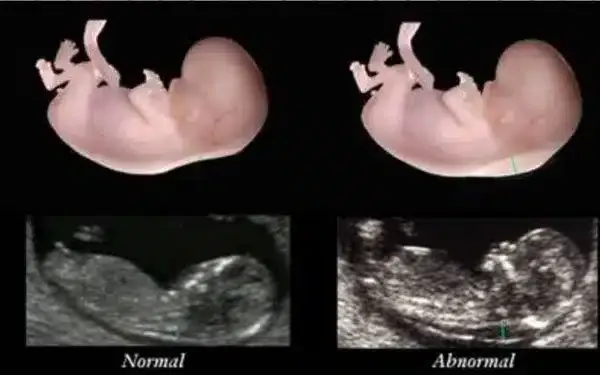
This small space—called the nuchal translucency—is present in all fetuses at this stage. However, a thicker-than-normal measurement may indicate a higher risk of chromosomal conditions like Down syndrome (Trisomy 21), Trisomy 18, or Trisomy 13. In some cases, it may also be an early sign of heart defects or other developmental concerns.
The NT scan is non-invasive, safe, and painless. It is usually performed via abdominal ultrasound, though a transvaginal approach may occasionally be used if better imaging is needed.
⏱ When Should the NT Scan Be Done?
The NT scan must be done between 11 weeks 0 days and 13 weeks 6 days of pregnancy. The ideal time is around 12 weeks, when the baby is big enough to measure accurately, but still early enough to provide timely screening.
If you’re not sure how far along you are, our Due Date Calculator can help you estimate your pregnancy weeks and plan your scan accordingly.
After this window, the fluid starts to be absorbed, and the scan becomes less reliable. That’s why it’s important to schedule this ultrasound in advance.
🔍 What Does the NT Scan Detect?
The NT scan is primarily used to assess the baby’s risk of chromosomal conditions, especially:
- Down syndrome (Trisomy 21)
- Trisomy 18
- Trisomy 13
But it doesn’t stop there. A significantly increased NT measurement (typically over 3.0 mm) may also signal:
- Congenital heart defects
- Genetic syndromes not related to chromosomes
- Lymphatic or structural issues
Doctors may also check other markers, such as whether the nasal bone is visible, or if the baby’s growth and heartbeat are developing normally. These findings contribute to an overall risk assessment.
Importantly, the NT scan is a screening test—it doesn’t diagnose anything by itself. It helps identify which pregnancies may benefit from further testing.
📈 How Accurate Is It?
On its own, the NT scan detects about 70–80% of Down syndrome cases. But when combined with maternal blood tests (measuring PAPP-A and free beta-hCG) and maternal age, the detection rate improves to over 85–90%.
Still, it’s not definitive. If the scan shows a higher NT measurement, your doctor may recommend:
- Non-Invasive Prenatal Testing (NIPT)
- Chorionic Villus Sampling (CVS) or amniocentesis for a clear diagnosis
- A fetal echocardiogram later in pregnancy to examine the baby’s heart
🔁 NT Scan and NIPT: Do You Need Both?
Yes—and here’s why.
NIPT is a highly accurate blood test that analyzes fetal DNA to screen for chromosomal conditions. But it cannot detect structural issues, and it does not offer a real-time visual assessment of fetal development.
The NT scan and NIPT are complementary:
FeatureNT ScanNIPTChecks for chromosomal risk?✅✅Detects physical anomalies (e.g. heart defects)?✅❌Requires ultrasound?✅❌Can identify twin-specific issues?✅❌Can determine sex?❌ (not reliably)✅ (if desired)
Professional guidelines from ACOG (American College of Obstetricians and Gynecologists) recommend offering both to all pregnant patients. Even if you’ve done IVF with PGT-A, most doctors will still suggest doing the NT scan to confirm early development and catch issues that PGT-A might not detect.
🤝 A Special Note for Intended Parents
While most intended parents do not attend the NT scan in person, many choose to stay informed and emotionally connected. Your care team or agency can share scan photos, measurement results, or even a brief summary to help you feel part of this meaningful milestone.
The NT scan may be the first time you see your baby’s profile and learn that everything is progressing well. Even from a distance, this update often brings reassurance, excitement, and a deeper sense of connection to your growing family.
❓ FAQ: NT Scan Questions from Intended Parents
1. Is the NT scan safe for the baby and the surrogate?
Yes. It’s a completely non-invasive ultrasound using sound waves—no radiation, no harm to the baby or carrier.
2. What is considered a normal NT measurement?
Typically, 1.5–2.5 mm is considered normal. Values above 3.0 mm may indicate a higher risk.
3. What happens if the NT is high?
Your doctor may recommend follow-up tests such as NIPT, CVS, or amniocentesis, and possibly refer for a fetal echocardiogram.
4. Can I skip the NT scan if I’ve done NIPT?
It’s not recommended. NT and NIPT assess different things and together give a more complete picture of your baby’s health.
5. Does a normal NT scan mean everything is fine?
A normal NT scan is very reassuring, but it does not rule out all conditions. Later anatomy scans and tests are still important.
6. Is this scan reliable with twins?
Yes. NT is actually one of the few first-trimester screens that can be done for each twin individually, making it very useful in twin pregnancies.
7. What if the embryo was tested with PGT-A?
Even if the embryo passed genetic screening before transfer, NT scans are still recommended to check for heart defects or non-chromosomal anomalies.
8. Can the NT scan reveal the baby’s sex?
Not reliably. Fetal sex determination is typically done later or through NIPT, which can report it with high accuracy.
✅ Final Thoughts
The NT scan is more than just a test for Down syndrome—it’s an early and important look at your baby’s overall development. Whether your child is being carried by a surrogate or yourself, this scan provides valuable insight, confirms milestones, and strengthens emotional connection.
At Ivy Surrogacy, we support our intended parents in staying involved and informed throughout the journey. The NT scan is one of the first big moments. We’re here to help you make the most of it.


